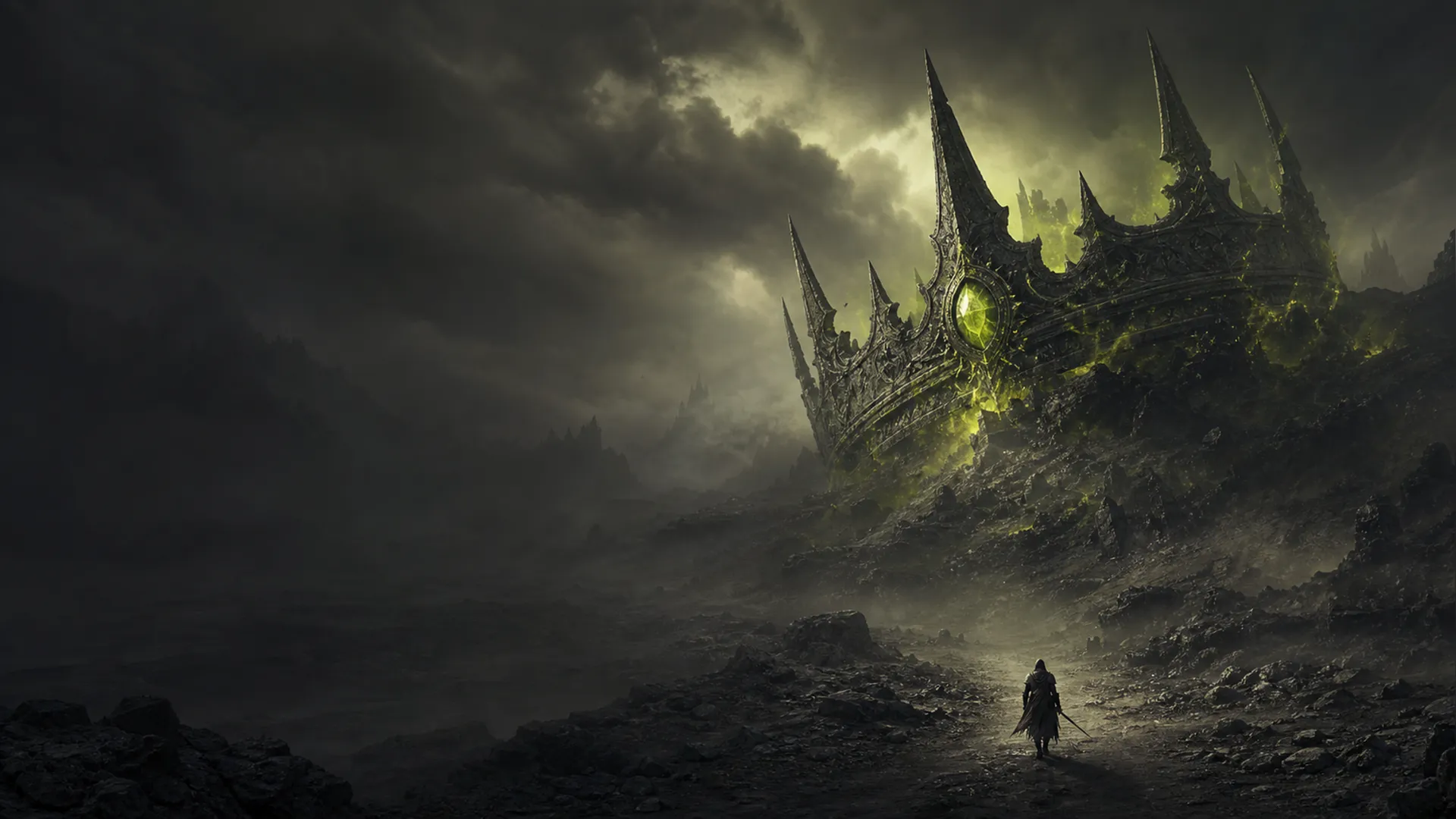
Paper Lanterns review — a small game about carrying other people’s words
Small Hours asks you to row a flooded town for six hours delivering letters and remembering who lives where. It is stranger and sadder than that description suggests.
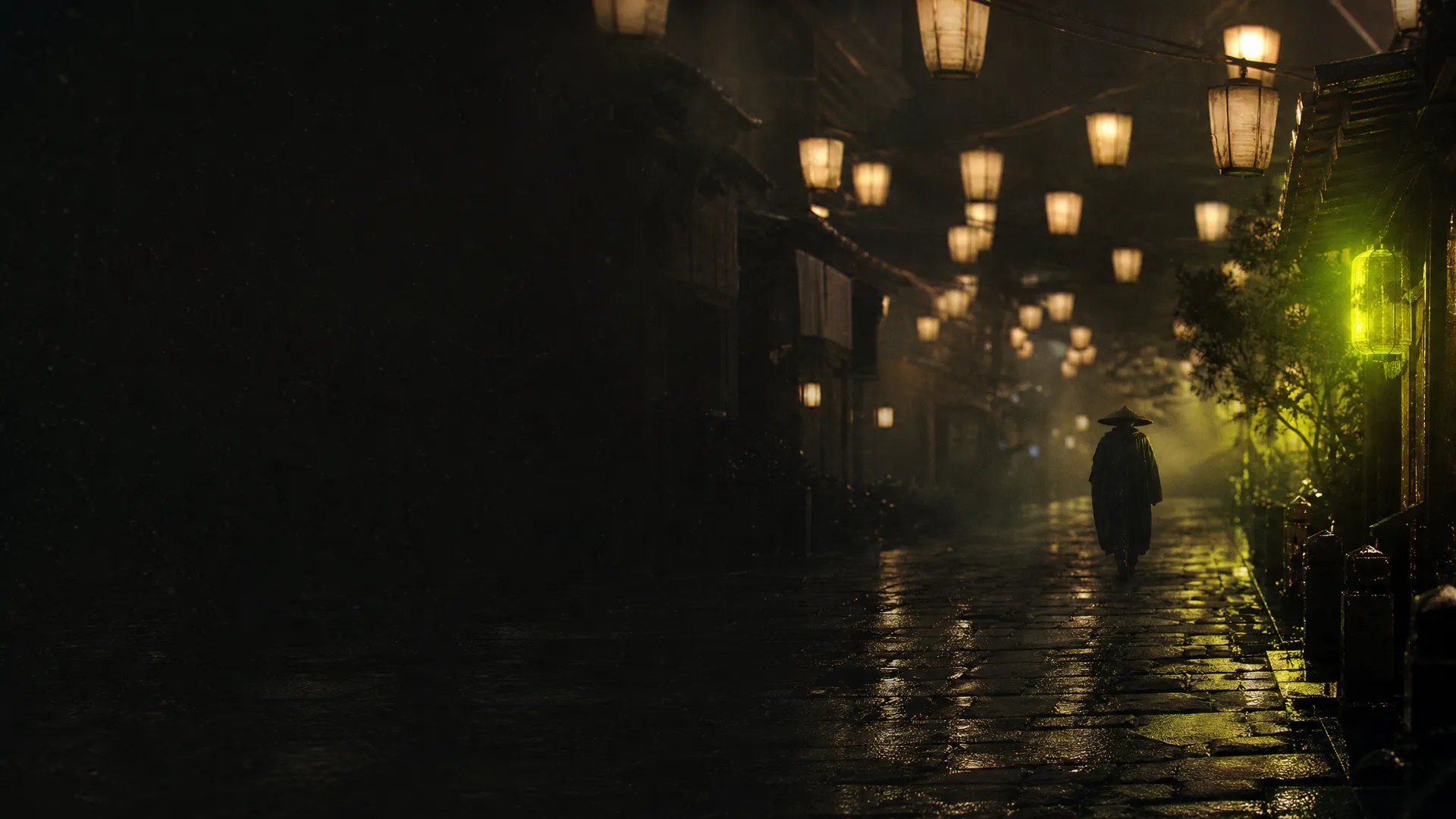
Paper Lanterns gives you a rowing boat, a canvas satchel, and forty-one addresses in a town where the ground floors are underwater. It does not give you a map. It gives you a notebook, and expects you to fill it in.
You are the postal runner for Ondu, a coastal town that flooded some years ago and never quite emptied. The people who stayed live on the upper storeys, reachable by a window, a balcony, or a plank someone has laid between roofs. Letters still arrive at the depot each morning. Getting them to the right window is the entire game.
Small Hours, a three-person studio, has built the whole thing around a single friction: the addresses in Ondu no longer correspond to anything. The street numbers refer to doors that are two metres under. So each morning you take a letter addressed to 14 Weaver’s Row and you work out, from what people have told you and what you wrote down last week, which upper window that now means. There is no marker. There is no confirmation until you knock.
What makes this work rather than exhaust is that the town is small and consistent. Forty-one households, a handful of routes, tides that rise and fall on a fixed daily cycle and open or close particular passages. By the third in-game week I could get from the depot to the eastern roofs without thinking about it, and that competence is the game’s actual reward. Nothing levels up. You do.
The letters are the writing
You cannot open the mail. You can, however, read the envelopes, and the game does an extraordinary amount with that constraint. The same tight, cramped handwriting arrives for the lighthouse keeper every Tuesday for six weeks and then stops. A letter to a house you know is empty keeps being sent, and after a while you notice the sender’s address is the house next door.
None of this is explained. There are no journal entries summarising what you have worked out, no character who arrives to tell you what it means. The story is assembled entirely from the surfaces of things you are carrying but not permitted to read, and by the end I had a fairly complete picture of two marriages, one bankruptcy and a death, none of which the game ever states.
You cannot open the letters. That single restriction does more narrative work than most games manage with a hundred hours of voiced dialogue.
The households talk, too, and the dialogue is written with a lightness that keeps it from tipping into whimsy. Ondu’s residents are not quirky. They are stubborn, mildly embarrassed about their circumstances, and inclined to make conversation with the only person who visits them regularly. A woman on Weaver’s Row spends five weeks asking you for news about a road reopening. On the sixth she asks you not to mention it again. That is the whole arc, and it landed harder than most things I have played this year.
Where it strains
The rowing itself is thin. Your boat has one speed, the tide gives passages a binary open or closed state, and after the first few hours the traversal has said everything it has to say. The game is roughly six hours long and I would argue it has about five hours of movement design in it.
There is also one structural misstep. A late chapter introduces a timed delivery — a letter that must reach a specific window before the tide turns — and it is the only point where failure is possible in a game that has otherwise been carefully failure-free. It injects a tension the rest of the design does not want, and it made me play badly, rushing past exactly the observations the game is built to reward. I would cut it.
Accessibility deserves a mention because Small Hours has clearly thought about it. Text size is adjustable across three steps including a genuinely large option, the notebook can be set to auto-record addresses you have confirmed, and there is a toggle that removes the timed delivery entirely. That last option is buried two menus deep and should be on the first screen.
The verdict
Paper Lanterns is a game about the difference between an address and a home, and it makes that point through an interface rather than a speech. It is short, deliberately limited, and completely certain of what it is doing.
It also happens to be one of the best fits for a handheld I have played — six hours, no fail states worth speaking of, natural stopping points every ten minutes, and a visual style that survives a small panel. If you are weighing up hardware, our piece on what changed in the Vector Deck Mk II is relevant here, because this is exactly the kind of game those machines exist to carry. Play it in two sittings. Keep your own notes.