Ashfall: Widow’s Crown review — the smallest-feeling big open world in years
Halcyon Bureau’s third Ashfall deletes the icons, trusts you to write your own map, and turns a vast region into somewhere you can actually hold in your head.
There is a moment about nine hours into Ashfall: Widow’s Crown when the map stops being a map and starts being a memory. You know the ford is south of the burnt chapel because a carter told you so, and you know the carter was probably lying about the depth, and you go anyway.
Halcyon Bureau has made three Ashfall games now, each larger than the last, and this is the first one that feels small. Not short — it took me sixty-one hours to reach the ending I got, and I skipped a great deal — but small in the way a town you have lived in is small. Vess is an enormous region rendered at a scale that makes crossing it a decision. What has changed is not the size. It is that the game has stopped telling you what is in it.
The mechanism is unglamorous. There are no discovery icons. Landmarks do not populate your map when you approach them. Instead, the game has a hearsay system: characters mention places in conversation, and when they do, you get an approximate note pinned to your map with a radius rather than a point. A guard says the mill upriver has been quiet for a month. That is now a circle on your map, roughly two hundred metres across, labelled in your character’s handwriting with what you were told rather than what is true.
Then you go and find out. Sometimes it is a mill. Sometimes the guard had the wrong river. This sounds like friction, and for the first two hours it is exactly that — I spent a lot of that time wanting a marker. What happens afterwards is that the region becomes yours in a way that a heat map of collectibles never manages, because the only reason you know where anything is is that you went there.
A world that refuses to be a checklist
The Ashfall series has always had a strong sense of place and a weak sense of restraint. The second game, in particular, buried a genuinely good story under nine hundred points of interest, most of which were a chest guarded by three bandits. Widow’s Crown has perhaps a quarter as many locations and they are almost all authored by hand.
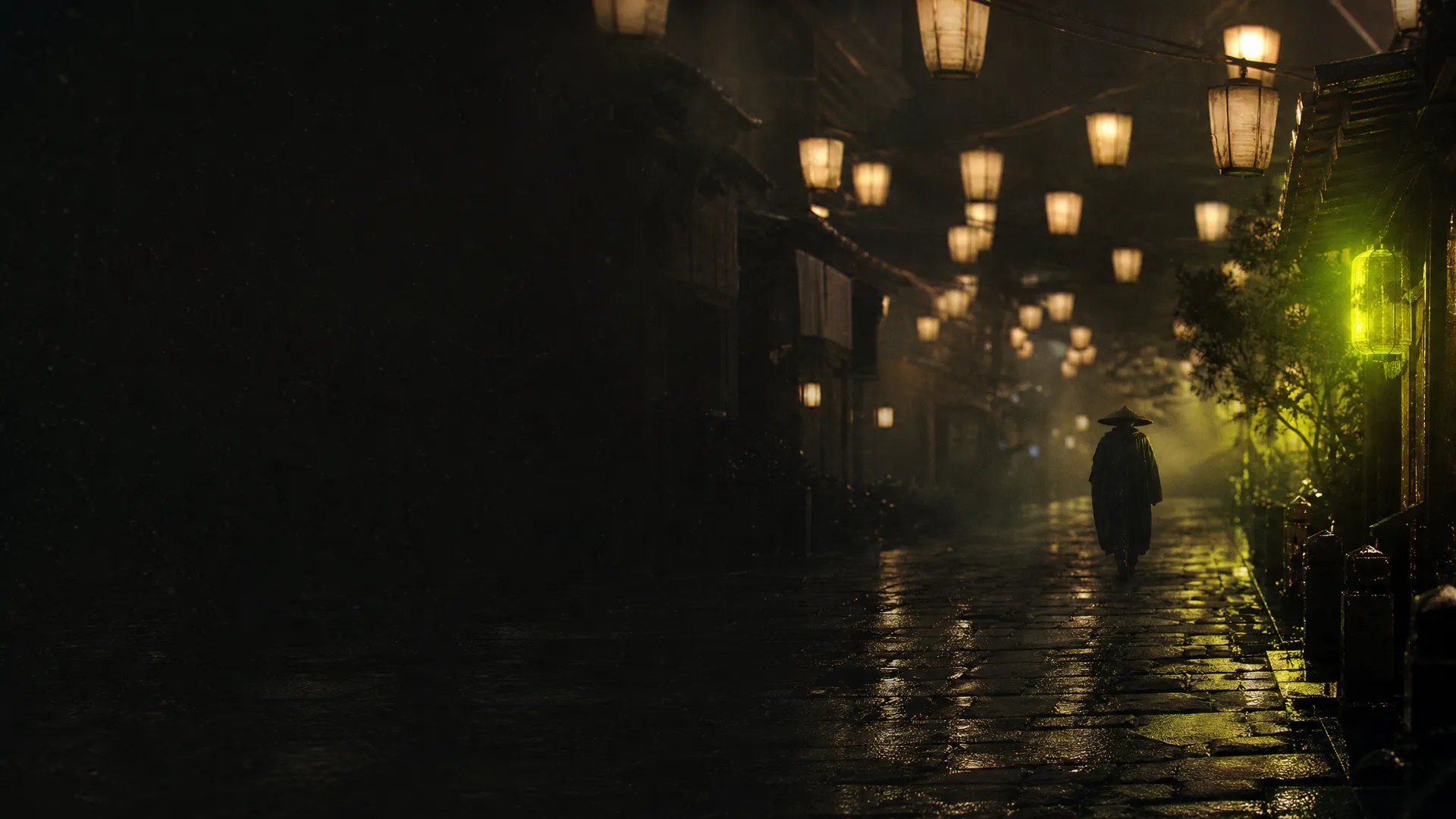
You feel that most in the middle of nowhere. There is an abandoned tollhouse on the northern road with no quest attached to it, no enemies, and one readable object: a ledger recording six months of increasing bribes and then nothing. The tollhouse is not a puzzle. It does not unlock anything. It is there because someone decided the road should have a history, and the game trusts you to notice.
The only reason you know where anything is is that you went there. That is the entire design, and everything good about this game follows from it.
The writing supports the structure rather than fighting it. The main quest concerns a succession crisis in a province that has been quietly starving for a decade, and it is unusually willing to let you be wrong. I spent about fifteen hours convinced I understood who was responsible for the grain shortfall. I was not close. The game never corrected me; it simply kept letting me act on the assumption until the consequences arrived.
The combat finally has a spine
Ashfall’s combat has historically been its weakest limb — functional, weightless, mostly a tax on exploration. It is genuinely good here. Weapons have distinct recovery windows, blocking costs a resource that does not regenerate mid-exchange, and enemies telegraph in a visual language that stays consistent across the whole bestiary, so learning one bandit teaches you something about a bear.
It is also, at launch, unbalanced in a specific and irritating way. Heavy armour is a trap; the stamina system charges you for the weight twice, once on the action and once on the recovery, which makes the heaviest builds strictly worse than the mid-weight ones at everything. Halcyon has since addressed this — our report on what patch 1.4 changes covers the rebuilt stamina economy — but I played the bulk of my sixty hours before that, and for most of them the answer to every problem was a medium-weight kit and a lot of rolling.
The difficulty curve has one obvious spike, and it has a name. The Tidewarden sits at roughly the two-thirds mark and is tuned for a player who has understood the block-recovery interaction completely. Plenty of people have not, because nothing before it demands that they do. It is a good fight badly placed, and if it is what stops you, our Tidewarden guide exists for that reason.
Where it sags
The last ten hours are weaker than the fifty before them. As the succession plot converges, the game starts telling you where to go, and the hearsay system — the best thing in it — recedes into a conventional quest marker chain. I understand why; a climax needs pacing that a rumour cannot guarantee. It still feels like the game losing its nerve at the exact moment it should be trusting you most.
There are rough edges elsewhere. Performance in the capital district is poor and has stayed poor. The inventory interface is a genuine chore, requiring four inputs to compare two items. And the hearsay notes have no way to be marked resolved, so a long playthrough leaves your map cluttered with circles around places you cleared thirty hours ago.
The verdict
Widow’s Crown is the rare sequel that got better by removing things. Take out the icons, take out three-quarters of the locations, take out the assumption that a large map needs to be legible from the menu, and what is left is a region you learn instead of consume.
It is not a frictionless game and it is not trying to be. If you want a world that tells you where the good stuff is, this will annoy you for its entire length. If you have ever finished an open-world game and realised you could not describe a single route through it from memory, this is the correction — and it is the best thing Halcyon Bureau has made.